Event Budget Planning Guide: Strategy, Templates & Expert Advice for 2026
If it feels like every line item in your event budget is creeping upward, you’re not imagining it. According to the 2026 Amex GBT Global Meetings & Events Forecast, 71% of planners expect per-attendee costs to rise this year, driven by higher food and beverage, labor, and venue costs. Cost has become the number-one challenge for event planning, cited by 38% of meeting professionals, outpacing macroeconomic uncertainty and budget cuts. Effective event budget planning has never been more critical.
The December 2025 Northstar/Cvent Meetings Industry PULSE Survey shows similar pressure: 64% of planners expect budgets to rise 5–14% in 2026, and 58% expect costs to climb in that range. At the same time, 63% are actively seeking savings that won’t compromise the attendee experience, a balance that requires sharper event budgeting, not guesswork.
Want a custom budget framework for your next event?
Boards and senior leadership are also demanding more accountability. According to the Global DMC Partners 2026 Meetings & Events Industry Pulse Survey, 68% of planners report stakeholder pressure to prove program impact, with one in five describing that pressure as significant or extreme, yet roughly 70% of the industry still lacks the analytics tools leadership expects.
A disciplined event budget is your roadmap for hosting events that align with organizational goals while staying within financial limits. It clarifies fixed and variable event costs, projects revenue (registration, sponsorships, exhibitor fees), and produces P&L scenarios so you know your break-even point and investment case for sponsors and leadership.
Between rising costs, tighter marketing budgets, and greater demand for event ROI, event planners and teams are being asked to do more with less, and to prove every dollar was well spent. This guide walks you through practical, up-to-date event budgeting strategies for 2026, plus templates and tools to build a realistic event budget faster.
What Is an Event Budget?
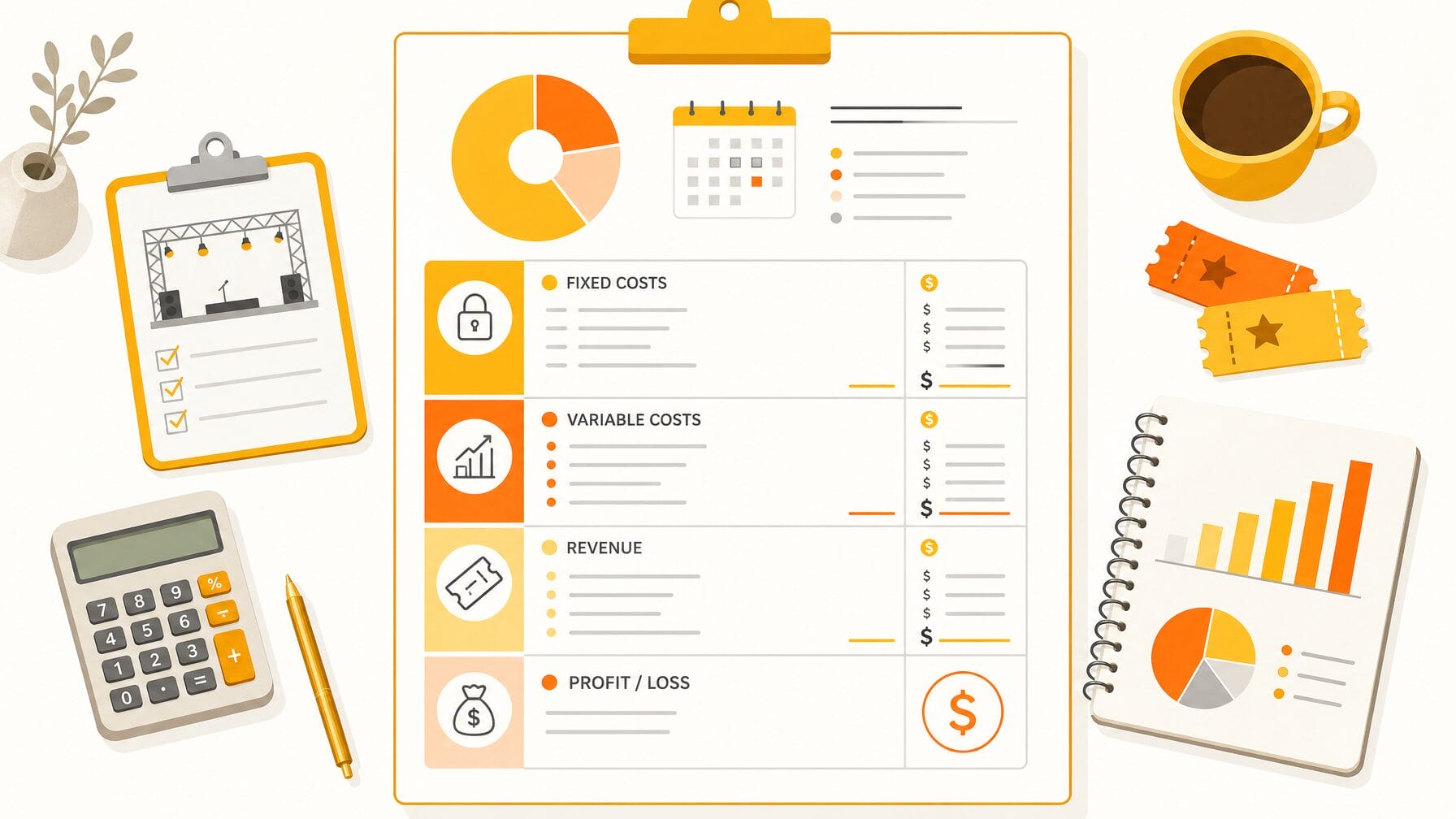
An event budget is the financial plan that maps projected expenses and expected revenue for an event. It is the single document that helps planners manage costs, prioritize spend, and measure whether the event achieved its financial and strategic goals. Without one, teams are forced to make decisions reactively rather than strategically.
A complete event budget organizes costs and income into core components so you can model different outcomes and make confident decisions during planning.
Fixed costs: expenses that don’t change with attendance, such as venue rental, speaker fees, and event registration software.
Variable costs: per-attendee costs that scale with headcount, typically food & beverage, staffing, and printed materials.
Revenue: expected income from ticket sales, sponsorships, exhibitor fees, and ancillary services.
Profit & loss: the P&L projection shows your net position across attendance scenarios and reveals your break-even point.

Build projections for conservative, target, and stretch attendance so the budget guides decisions (venue deposits, staffing, and marketing spend) rather than reacting to surprises. Regular variance tracking is where you’ll learn what to change next time.
Quick example: a small association meeting targeting 200 attendees might model ticket revenue at $150/person (target), F&B at $80/person (variable), and fixed venue and speaker costs of $25,000. That simple P&L shows whether you need sponsorship or higher ticket tiers to reach your financial goal. This kind of conference budget per attendee modeling is essential for event budget planning at any scale.
How is an event budget different from an event plan? An event budget focuses exclusively on financial projections, cost tracking, and revenue modeling. An event plan covers logistics, timelines, vendor coordination, and programming. The budget is one component of the broader event plan, but it requires its own dedicated process and regular review cycle.
Why Event Budgeting Matters More Than Ever in 2026

Event budgeting matters more in 2026 because costs are rising across every major category, stakeholders demand measurable ROI, and planners who lack financial discipline risk overspending or losing leadership confidence. The pressure comes from both sides: higher expenses and greater accountability.
The financial environment for events in 2026 is unusually tight. Food & beverage, audio/visual, venue rental, and labor costs are all trending upward, forcing planners to rethink how they allocate limited budgets. The 2026 Amex GBT Global Meetings & Events Forecast highlights common reactions planners are taking: trimming F&B, changing venues, or cutting lower-value giveaways to preserve the core attendee experience.
Cost pressure is only half the story. Boards and senior stakeholders expect clearer accountability and proof of impact, so event budgeting must do double duty: control costs and demonstrate value. Sponsorships are increasingly treated as a deliberate budget line; planners are actively seeking sponsor investment to offset higher costs, but sponsors now demand measurable returns on that investment.

— Angie Duncan Callaway, CMM, Senior Director, Intent Strategy Group, Meetings & Incentives Worldwide
What to do now (quick actions):
- Lock in key vendor prices where possible (multi-year or early-bird contracts) to reduce venue and A/V volatility
- Reevaluate catering formats (buffet or plated vs. stations) and open-bar hours to manage catering costs without degrading the attendee experience
- Treat sponsorship as a planned revenue line: define sponsor deliverables and the metrics you’ll report back (leads, session attendance, app engagement)
What are the biggest event budget challenges in 2026? The three most cited challenges are rising per-attendee costs (71% of planners expect increases), pressure to prove ROI to leadership (68% report stakeholder pressure), and the need to find savings without compromising attendee experience (63% are actively seeking cost reductions). These challenges require planners to budget with greater precision and connect spending to measurable outcomes.
How to Plan Your Event Budget: 7 Steps
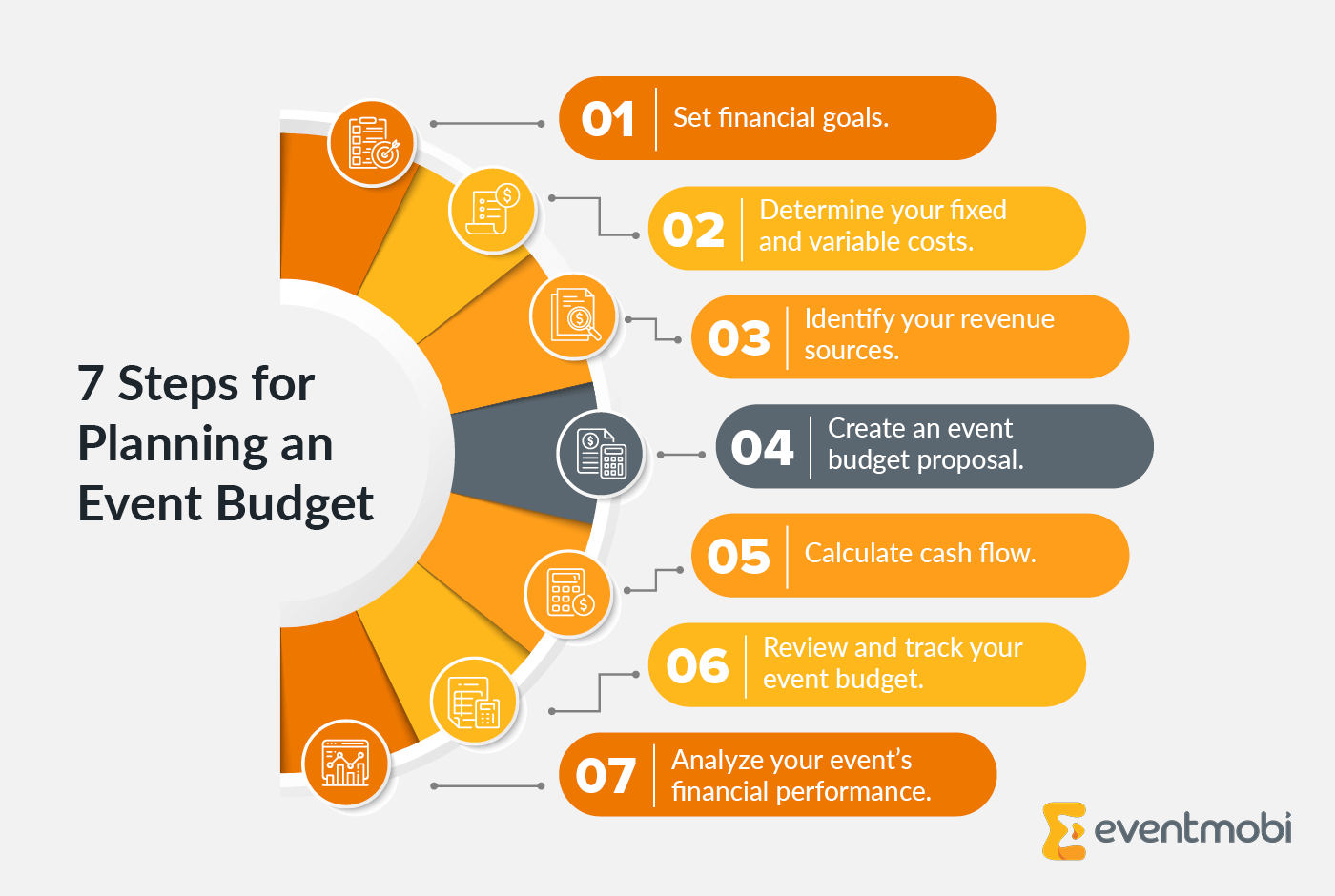
Planning an event budget follows seven steps: set financial goals, categorize fixed and variable costs, identify revenue sources, build a proposal, calculate cash flow, track spending throughout, and analyze post-event performance. Each step builds on the previous one and creates accountability at every stage of planning.
Step 1: Set Financial Goals for Your Event
Decide upfront whether your event is designed to generate profit, break even, or accept a strategic loss. Prepare an event profit-and-loss budget and predict, as accurately as possible, the financial outcome. What financial success looks like depends on your event type and objectives. An annual conference might be designed to break even or run a slight loss, but if it drives new membership, the long-term dues revenue more than makes up for it. Getting stakeholder alignment before the budget is approved saves significant friction later.

— Colleen Connor, Senior Director of Events, MPI
Step 2: Determine Your Fixed and Variable Costs
Categorize every expense as fixed or variable before you start building your numbers. Fixed costs are calculated as a total amount and don’t change with attendance; variable costs are calculated per person and scale with your headcount.
For in-person events, the biggest variable cost drivers are typically F&B, staffing, and attendee materials. For hybrid and virtual events, technology costs take on greater weight: think A/V for remote audiences, streaming services, and platform fees.
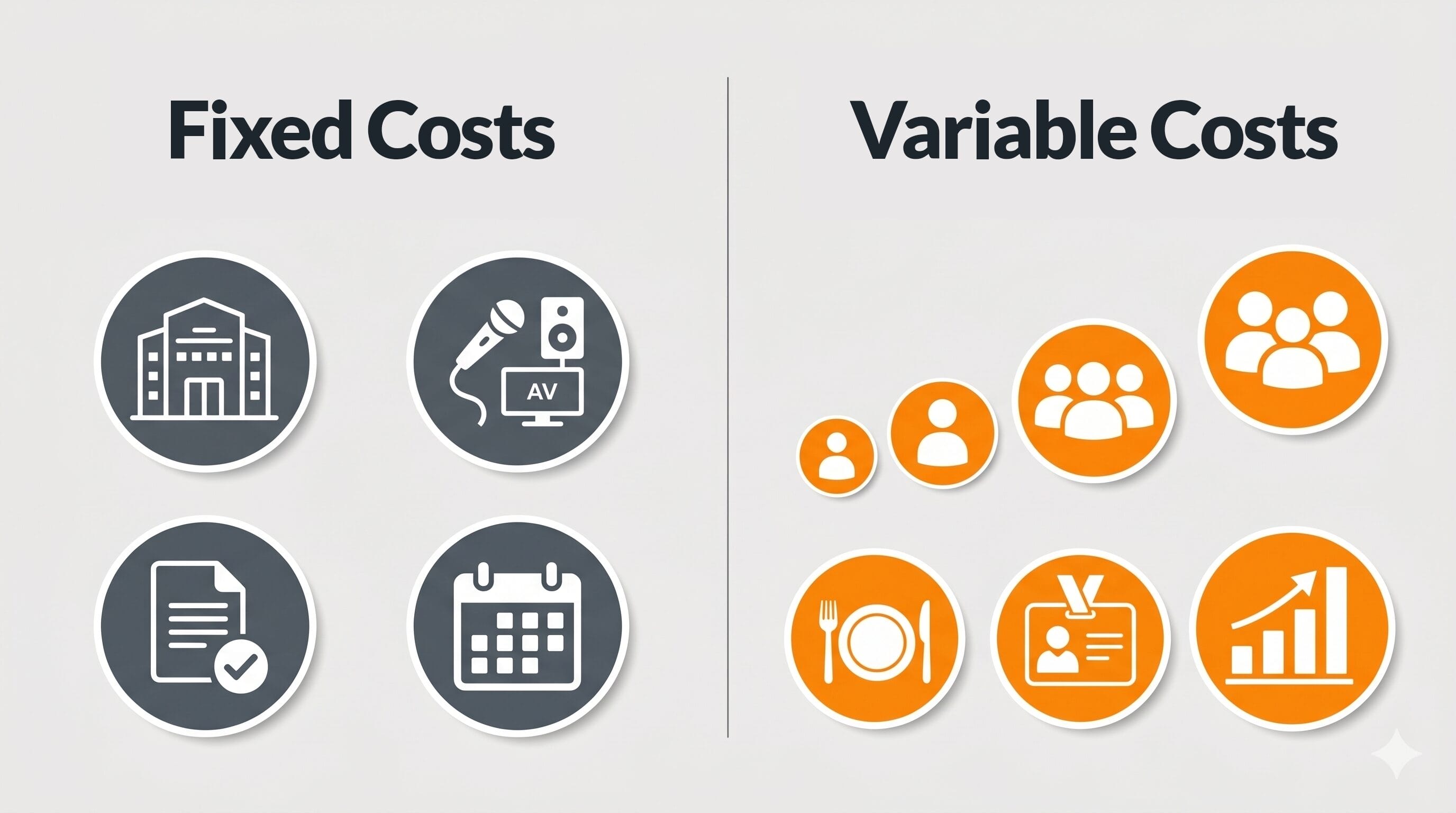
When it comes to variable costs, even experienced planners can get caught off guard. Common culprits include labor overruns, A/V add-ons added day-of, F&B overages, and last-minute signage reprints. Frame your event contingency fund as risk management, not padding, and attach each one to a specific scenario.
— Angie Duncan Callaway, CMM, Senior Director, Intent Strategy Group, Meetings & Incentives Worldwide
Step 3: Identify Your Revenue Sources
Build your revenue picture early and be realistic, not optimistic. Common event revenue sources include registration and ticket sales, sponsorships, exhibitor booth fees, advertising, concessions, and management fees. Use a spreadsheet or budgeting tool to track these by category, and keep all invoices and receipts to support your numbers.
One essential practice: allocate a contingency fund for unexpected expenses before you move to venue selection, promotion, and staffing. If your event isn’t financially viable with a contingency built in, that’s important to know before you’ve made commitments.
Step 4: Create an Event Budget Proposal
Build an event budget proposal that gives leadership everything they need to say yes, and to understand exactly what they’re approving. Beyond projected revenue and expenses, a strong proposal includes:
- The stated purpose and goals of your event
- Data from past comparable events
- Information on comparable industry events
- Contingency plans and potential overages
- A clear explanation of how you’ll measure and report ROI
— Angie Duncan Callaway, CMM, Senior Director, Intent Strategy Group, Meetings & Incentives Worldwide
Step 5: Calculate Cash Flow for Your Event
Cash flow tells you whether you have the liquidity to pay your bills when they’re due, and it’s different from your overall budget picture. Use this formula:
All Revenues – Uncollected Accounts Receivable = Cash on Hand Before Expenses
Cash on Hand Before Expenses – Accounts Payable = Cash on Hand
If the result is positive, you have positive cash flow. Monitor this throughout the planning process, not just at the start, to prioritize spending, avoid shortfalls, and keep the event financially viable as commitments accumulate.
Step 6: Review and Track Your Budget
Treat your budget as a living document, not a one-time exercise. Not all expenses can be forecasted at the outset, and your budget will change as planning progresses. Review it regularly, confirm in advance who has the authority to approve spending beyond the approved budget, and use your event contingency fund as your first line of defense when unplanned expenses arise.
Cloud-based financial management tools like Expensify, FreshBooks, or Certify make it easier to track in real time, from anywhere.

Watch the EventMobi Product Tour to learn how to create on-brand, on-budget events with a single, powerful platform.
Step 7: Analyze Your Event’s Financial Performance
After the event, go beyond the numbers. Use your data to tell the story of what the budget actually delivered. Revisit the success measures and benchmarks you set at the outset. Using both qualitative and quantitative data gives you a fuller picture of impact than financials alone. For associations looking to strengthen their post-event financial analysis, see how to approach association event financial management for additional frameworks. For a full framework on what to track and how, see How to Measure Event ROI: 7 Steps + Metrics to Track.
Return on investment (ROI) is the primary measure of event success for most organizations, but it’s worth thinking beyond a single bottom-line figure. Non-monetary ways to measure business impact that feed into your overall event ROI picture include:
- Social listening
- Event surveys
- Event app insights and engagement data
- Attendance tracking and session-level analytics
- Sponsor recognition and interaction metrics
For associations, the most persuasive ROI metrics include new memberships and renewals driven by the event, additional educational certificate revenue, engagement survey data (including NPS scores), and total event sponsorship revenue. For corporate events, pipeline influence, deal velocity, and customer retention are increasingly common measures. Whatever you use, present them with year-over-year comparisons and let the data do the talking.
— Angie Duncan Callaway, CMM, Senior Director, Intent Strategy Group, Meetings & Incentives Worldwide
How do you measure event budget success after the event? Compare actual spending to your original projections across each budget category. Then connect financial outcomes to strategic goals: did sponsorship revenue meet forecasts, did attendance hit targets, and did the event produce measurable results (leads, memberships, NPS improvements)? The strongest post-event reports show both financial and strategic performance side by side.
Event Cost Breakdown: What to Budget For
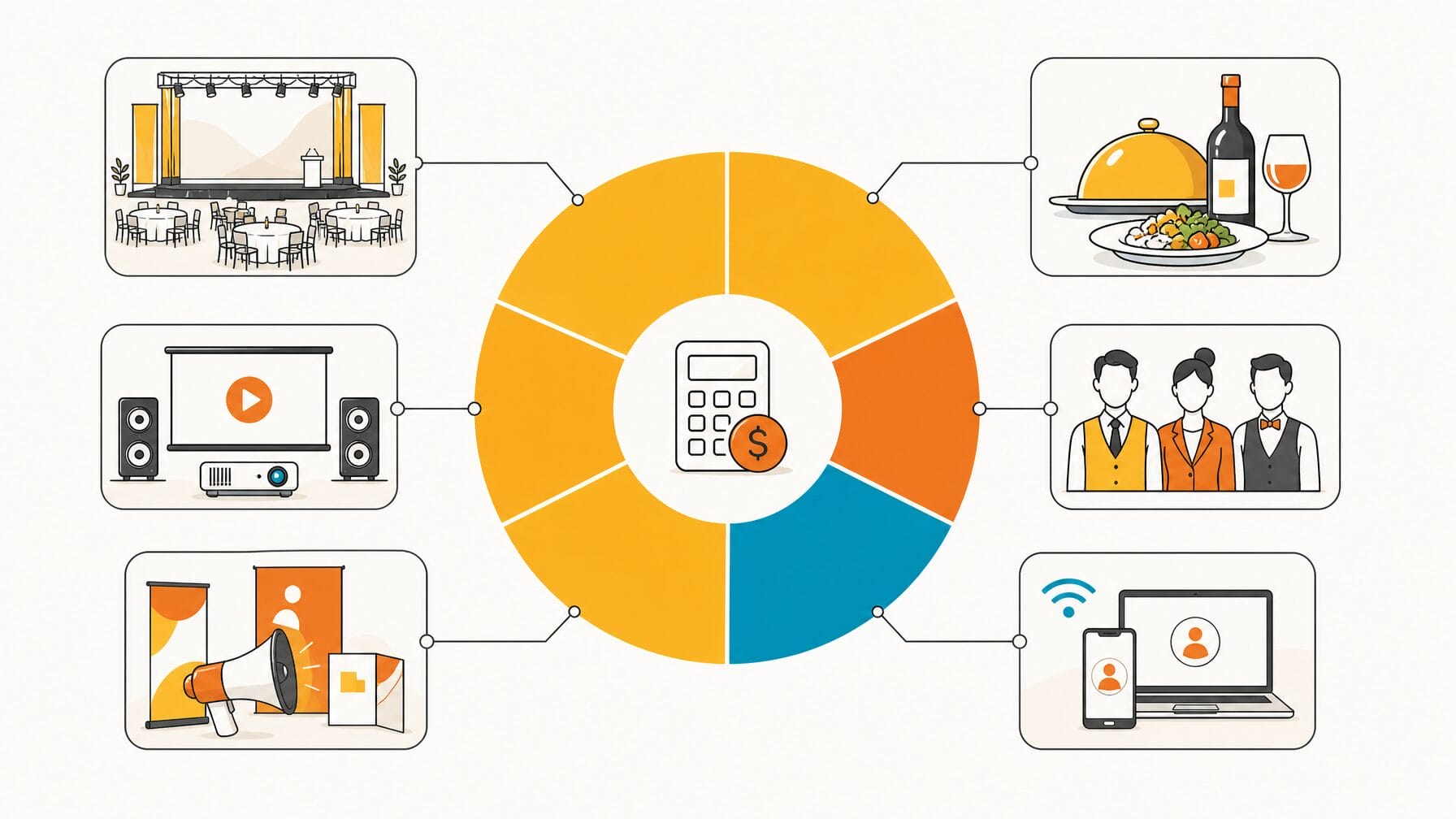
The primary cost categories for in-person events are venue, food and beverage, audio/visual, staffing, marketing, speaker fees, entertainment, decor, and event technology. For most events, F&B and venue are the two largest line items combined, often accounting for 50–70% of total spend. According to the 2025 Northstar/Cvent Meetings Industry PULSE Survey, the biggest cost pinch points planners cite are travel and lodging (78%), F&B (69%), and higher room rates (63%).
For each category, classify costs as fixed or variable, and factor in current benchmarks. The Maritz Global Events March 2026 Industry Trends Report projects average overall cost increases of 2–4% across hotels, airfare, F&B, and event-staff wages through 2026–2028, modest by recent standards, but compounding on top of several years of above-average inflation.
2025–2026 Event Cost Benchmarks by Category
Ranges reflect typical U.S. conference/association event costs. Primary city markets (NYC, SF, Chicago) run 30–50% higher. All figures are pre-service charge; add 20–25% for hotel venue service charges and taxes.
| Category | Type | 2025–2026 Benchmark Range | Common Hidden Costs | Cost-Reduction Tips |
|---|---|---|---|---|
| Venue rental | Fixed | ● $2,000–$25,000/day (secondary market hotel ballroom) ● $10,000–$100,000+/day (primary market or convention center) | ● Setup/teardown fees, overtime charges, Wi-Fi upgrades ● AV rigging fees ($500–$3,000+), cleaning deposits | ● Book Tue–Thu (20–40% cheaper); choose secondary cities ● Negotiate multi-year contracts |
| Food & beverage | Variable | ● $60–$120/person/day (breakfast + lunch + breaks) ● $160–$300/person/day (full-service all-day catering) ● $75–$200+/person/meal (hotel plated dinner) | ● Service charges and gratuity (18–25%), corkage fees ● Labor charges, overtime after contracted hours ● Dietary accommodation add-ons | ● Choose buffet over plated; limit open bar hours ● Seasonal menus; confirm guarantee policy (72–96 hrs advance notice) |
| Audio/visual | Fixed / Variable | ● $1,000–$5,000 (basic: screen, projector, mics) ● $10,000–$30,000 (professional production) ● $20,000–$60,000 (mid-sized multi-day, 200–300 attendees) ● $50,000–$150,000+ (broadcast-quality with LED walls) | ● In-house hotel AV marked up 30–50% ● Last-minute add-ons (extra mics, monitors); technician overtime ● Cable runs and rigging; internet bandwidth upgrades | ● Bring your own AV vendor where possible ● Lock speaker AV riders 3+ weeks out; bundle multi-day rates |
| Staffing (onsite) | Variable | ● $15–$30/hour (registration/setup staff) ● $25–$50/hour (security) ● 1 staff per 75–100 attendees at peak check-in | ● 4-hour union minimum charges; overtime rates ● Last-minute additions difficult to source | ● Use volunteers for lower-stakes roles ● Self-check-in and badge printing stations reduce headcount needed |
| Speaker fees | Fixed | ● Internal speakers: $0 ● Industry experts: $5,000–$30,000 ● Keynotes (name recognition): $10,000–$50,000+ ● Celebrity speakers: $50,000–$500,000+ | ● Travel, accommodation, ground transport ● A/V rider requirements; last-minute cancellation penalties | ● Negotiate multi-event agreements ● Use remote/virtual keynote delivery to eliminate travel costs ● Leverage member speakers where appropriate |
| Marketing & promotion | Fixed | ● Typically 10–15% of total event budget ● Covers digital advertising, email, social, print, photography/video | ● Post-production editing (often underestimated) ● Paid social overspend if not capped; last-minute signage reprints | ● Reuse evergreen content across events ● Negotiate multi-event photography packages ● Front-load email vs. paid ads |
| Event technology | Fixed | ● $3,000–$15,000 (registration + event app + analytics, mid-size association) ● $5,000–$30,000+ (virtual/hybrid platform) ● Note: per-ticket fee platforms erode revenue at scale | ● Platform switching costs; integration fees between disconnected tools ● Last-minute onsite tech support | ● All-in-one platform eliminates per-ticket fees and per-tool overhead ● Confirm what’s included vs. charged separately upfront |
| Decor & signage | Fixed | ● $500–$5,000 (basic branded signage and banners) ● $5,000–$30,000+ (custom staging, florals, environmental design) | ● Reprint costs for errors; freight/drayage fees at convention centers ● Union labor for installation | ● Invest in reusable modular signage ● Digital signage eliminates reprint costs ● Simplify decor in favor of F&B or content quality |
| Insurance & permits | Fixed | ● $200–$1,000 (event liability insurance; most venues require $1M+ coverage) ● $50–$1,000 (permits and licenses, varies by jurisdiction) | ● Often overlooked entirely in first-time event budgets ● Permit fees vary significantly by city and event type | ● Budget this early — it’s non-negotiable ● Confirm venue certificate of insurance requirements before signing contracts |
| Contingency fund | Fixed | ● 10–15% of total budget (established events, 3+ years of data) ● 15–20% of total budget (first-time events or new formats) | ● Not a hidden cost — the absence of it is the risk ● F&B overages, A/V add-ons, and signage reprints are the most common draws | ● Keep as a separate pool requiring explicit approval to access ● Tie each buffer to a specific if/then scenario for faster leadership sign-off |
| Total per-attendee (all-in) | — | ● Basic: $150–$300/attendee ● Mid-range: $300–$500/attendee ● Premium: $500–$1,000+/attendee(Excludes travel and lodging) | ● City selection alone can shift total event spend by 20–40% ● Hotel service charges (18–25%) not always visible in initial quotes | ● Build variable costs at 80% of projected attendance ● Scale up as registrations confirm |
For hybrid and virtual events, technology costs take on greater weight. Budget for both onsite and remote A/V, including camera operators, an IMAG operator, a video switcher, and a dedicated wired internet connection (minimum 100 Mbps download / 30 Mbps upload). Streaming options range from self-produced platforms like Zoom at the low end to full-service production teams at the high end.

Industry-Specific Event Budget Considerations
Cost priorities shift by sector. Account for industry-specific needs early in your event planning budget so they don’t become last-minute overruns.
Healthcare events: compliance, accessibility, and CME administration can add significant expenses that aren’t included in generic event budget templates.
Financial services events: enhanced security, attendee credentialing, and regulatory documentation often appear as unanticipated line items.
Construction & manufacturing events: equipment access, floor loading, freight, and safety requirements can materially increase venue-related costs.
— Colleen Connor, Senior Director of Events, MPI
What are the most commonly overlooked event budget costs? The most frequently missed line items include hotel service charges (18–25% on top of quoted rates), A/V technician overtime, last-minute signage reprints, Wi-Fi bandwidth upgrades, and dietary accommodation add-ons for F&B. First-time event planners also commonly overlook insurance, permits, and freight/drayage fees at convention centers.
How to Offset Your Event Budget With Sponsorship Revenue

Sponsorship is a planned line in your event budget, not an afterthought. For most mid-size conferences and trade shows, sponsorship revenue can offset 20–40% of total event costs when structured with clear deliverables and measurable returns for sponsors. Start forecasting event sponsorship revenue as soon as you build your initial budget, using at least three years of event history where available to set realistic expectations about close rates and typical investment levels.
Top planners build sponsorship projections 12–16 months out and maintain a sponsorship pipeline in the same budgeting spreadsheet or tool as ticket and exhibitor revenue. That makes your event budget more accurate and gives your team time to sell, negotiate deliverables, and invoice on schedule. For a deeper look at structuring packages that attract sponsors, see how to design event sponsorship packages that clearly communicate value.
Practical sponsorship opportunities and typical value ranges (use local market and event history to refine):
- App Sponsor / Event Tech Sponsor: $2,000–$15,000 (depends on platform reach and branding)
- Networking Lunch or Coffee Break Sponsor: $3,000–$25,000 (visibility + access to attendees)
- Lanyard / Bag / Swag Sponsor: $1,000–$10,000 (high visibility, lower delivery complexity)
What sponsors care about: include these metrics in your prospectus and in post-event reporting to prove investment value:
- Leads captured / meetings arranged
- Session attendance and engagement (session-level analytics)
- App usage, click-throughs, and content downloads
- Brand impressions and sponsor interactions (booth visits, meetings)
Want to offset your event budget with sponsorships?
If economic conditions raise sponsor scrutiny, beef up your prospectus with concrete, historical ROI examples (e.g., leads-to-sales, uplift in booth meetings). For planners without multi-year data, conservative estimates and clear delivery promises reduce negotiation friction. Looking for inspiration? Explore creative event sponsorship ideas that go beyond traditional booth packages and attract new sponsor investment.

— Mae Ibe, CMP, Customer Success Director and Conference & Trade Show Specialist, Meetings & Incentives Worldwide
When should you start selling event sponsorships? Begin sponsorship outreach 12–16 months before the event for large conferences, or 6–9 months for mid-size events. Early outreach gives sponsors budget cycle alignment and gives your team time to negotiate custom packages. Use historical close rates to set realistic revenue targets in the budget.
How to Build Your Event Budget With AI

AI tools can accelerate the budget-building process by generating tailored line-item frameworks, classifying costs, and producing P&L scenarios in minutes rather than hours. Static event budget templates are a useful starting point, but AI customization helps you build a data-informed budget specific to your event type, city, and format.
Use an AI tool (for example, Claude or ChatGPT) to generate a tailored event budget framework in minutes based on your event specifics. AI can suggest line-item ranges, classify fixed vs. variable costs, and produce P&L scenarios you can drop into your planning spreadsheets.
Below is a short and an advanced prompt you can use. Paste either into your AI tool, answer the follow-ups, and export the result into your event budget template or event budget calculator.
Short prompt (fast):
You are an expert event budget planner. Build a line-item budget for a [type of event], in [city, country], for [expected attendance], [format: in-person/hybrid/virtual], [# days]. Include fixed vs variable classification, realistic cost ranges, a 3-scenario P&L (70%/100%/125%), 10%–15% contingency recommendation, and three sponsor opportunities with value ranges.
Advanced prompt (detailed):
Here’s Your Event Budget Template Prompt
Paste this prompt into Claude.ai to generate a custom event budget framework in minutes.
You are an expert event budget planner with deep knowledge of association and corporate conference finance. Your goal is to help event planners build a realistic, strategic budget framework they can take into internal approvals or vendor conversations.
Before building the budget, ask all of the following questions at once:
- What type of event is this? (conference, trade show, association annual meeting, gala, etc.)
- Where will the event be held? (city and country — this determines regional cost benchmarks)
- What is the expected attendance?
- What is the event format? (in-person, hybrid, or virtual)
- How many days will the event run?
- What are the primary revenue sources? (ticket sales, sponsorships, exhibitor fees, grants, etc.)
- Is there a target total budget or any known cost constraints?
- Is this a first-time event or does it recur annually?
Once those questions are answered, produce the following:
1. Line-Item Budget by Category: Organize costs into: Venue & Space, Food & Beverage, Audio/Visual & Production, Staffing & Labor, Marketing & Promotion, Event Technology & Registration, Speaker & Entertainment, and Contingency.
For each line item, include:
- A realistic cost range based on current regional benchmarks
- Whether the cost is fixed or variable
- One practical note on where costs can be reduced without meaningfully impacting attendee experience
- A ⚠️ flag on any line items commonly underestimated by first-time planners
- A 📞 flag on any line items where pricing is highly vendor-dependent and should be confirmed with quotes before finalizing
2. Profit & Loss Projection: Show a summary P&L at three attendance scenarios:
- Conservative (70% of target)
- Target
- Stretch (125% of target)
Include total projected revenue, total projected costs, and net surplus or deficit at each scenario.
3. Sponsorship Offset Strategy: Provide three specific, actionable recommendations for offsetting costs through sponsorship revenue. For each, name the sponsorship category (e.g., Lanyard Sponsor, App Sponsor, Networking Lunch Sponsor), the typical value range, and what the sponsor receives in return.
4. Technology Consolidation Note: Include a brief note on how a connected event management platform covering registration, mobile app, attendee engagement, and onsite check-in can consolidate what planners often budget across three or four separate tools, and what to look for when evaluating options.
Format line-item costs as tables. Format the P&L projection, sponsorship strategy, and technology note as clearly headed sections. Use plain language throughout.
How accurate are AI-generated event budgets? AI-generated budgets provide useful starting frameworks and realistic cost ranges based on location, event type, and format. However, they should always be validated against actual vendor quotes for high-variance items like A/V, venue, and catering. Treat AI output as a first draft that accelerates planning, not as a final budget.
How EventMobi Helps You Stay On Budget
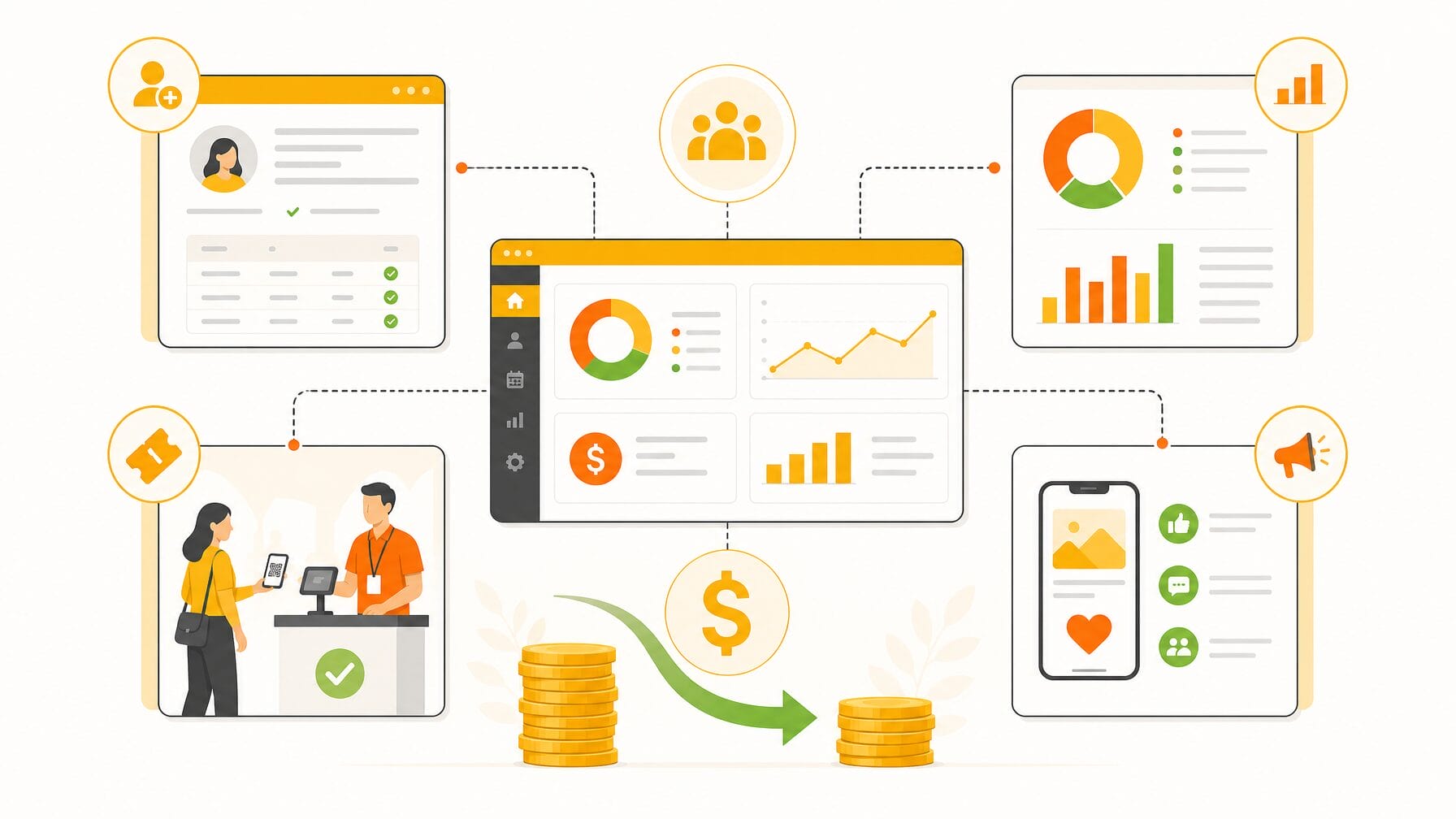
Technology is one of the most effective levers event planners have to control an event budget. The right platform captures both expense and revenue data alongside outcome metrics, giving you the visibility to prove ROI and refine future budgets. Here’s how EventMobi can help you manage budget, revenue, and reporting in one connected system.
Track Event Revenue in Real Time
Registration and ticketing are the clearest early indicators of budget performance. EventMobi’s registration and ticketing platform gives you live visibility into registrations, ticket types, promo code performance, and payments. That real-time registration data lets you see how revenue is pacing versus your event budget and take corrective action early (pricing, promotions, or sponsorship outreach).
Set multiple ticket types and registration paths for members, VIPs, sponsors, and general attendees so your revenue forecast reflects actual product mix. If registrations lag, you can pivot before deposits are due.
One practical advantage: EventMobi does not charge per-ticket fees, which helps protect margins as attendance scales. Confirm current pricing terms with your account rep when evaluating platforms.
Measure Event ROI With Connected Data
Proving ROI requires connecting registration, session attendance, engagement metrics, and sponsor interactions into a single picture. EventMobi’s analytics capture these signals automatically: who registered and paid, who attended which sessions, and how attendees engaged. Your post-event financial report ties outcomes directly to the budget.
That connected data makes sponsor value clear (leads, session attendance, app interactions) and reduces the time you spend reconciling spreadsheets, a hidden tools cost many budgets overlook.
— Angie Duncan Callaway, CMM, Senior Director, Intent Strategy Group, Meetings & Incentives Worldwide
Reduce Costs by Managing Your Event in One Connected System
Fragmented stacks (separate registration, app, check-in, and analytics tools) add platform fees, reconciliation work, and risk. A single platform reduces tool overlap and often lowers overall software and services costs.
EventMobi supports registration, onsite check-in and badge printing, attendee engagement, and analytics in one system, helping teams manage budgets with fewer integrations and less manual work. For nonprofits and associations with lean teams, consolidating platforms can be especially cost-effective.
What to confirm when evaluating any event platform: pricing (including platform fees), which services are included vs. add-ons, data export and integration options, and contract terms for multi-event discounts. Also ask for a short case example showing how the platform reduced overall event costs or consolidated tools for a similar customer.
How does event technology help control budget costs? A consolidated event technology platform reduces costs by eliminating per-ticket fees, removing redundant tool subscriptions, and reducing manual reconciliation time between disconnected systems. It also gives planners real-time financial visibility so they can adjust spending before overruns happen rather than discovering them after the event.
Event Budgeting Is the Foundation of Event Success
Getting event budgeting right isn’t about having the biggest budget; it’s about visibility, repeatable process, and the discipline to use data to inform decisions. When your team captures and analyzes financial and engagement data, the budget becomes a strategic tool that guides vendor choices, sponsorship packaging, and investment in the attendee experience.
Approach budget conversations with management as a decision-making brief: lead with the headline P&L and the most important insights (what changed, why, and recommended next steps). That way the budget doesn’t become a defensive exercise; it becomes a springboard for continuous improvement.
— Colleen Connor, Senior Director of Events, MPI
Make your event budget work for you: combine disciplined planning, contingency rules, and connected data to turn cost into a measurable investment.
No per-ticket fees, fewer fragmented tools, and a single system for registration through post-event reporting can simplify budgeting and protect margins. If you want hands-on help building your next event budget plan, book a free demo, or download a free event budget template and event budget calculator to get started immediately.
Event Budgeting FAQs

EventMobi is the event management platform that keeps you on budget.
No per-ticket fees, no fragmented tools, no surprise costs. One connected system that gives you real-time visibility into revenue, attendance, and ROI from registration through post-event reporting.
